
1. Is looking something we can learn?
I used to think that looking meant seeking out “important works.”
Entering a theater can feel like boarding an express train through time: for two or three hours, you experience another life, or temporarily begin to question things that did not originally belong to you.
Sometimes I follow a celebrity, a series, or an author. There is something directional in the word “chase”—a sense of being drawn toward something, and of being influenced by it. I used to wonder quite naturally: What important works have I not seen yet? Which artists are coming to this city? Which productions are worth making special time for?
Looking back at the past few years, however, I realize that what stays in my body is rarely a list of “what I have seen.” Usually, only a few moments remain.
A person standing and waiting for someone who will never appear again. A face suddenly enlarged by a camera until it nearly occupies the entire stage. Wet bodies carrying one another’s weight. A performer repeating the same action again and again. A sound beginning with one person and accumulating layer by layer. After a performance ends, a friend and I are still talking about a single line.
Sometimes, the fact that something happened seems to carry more weight than whether I fully understood it.
And I began to wonder: when I am no longer simply chasing a so-called masterpiece, what actually changes in the way I look?
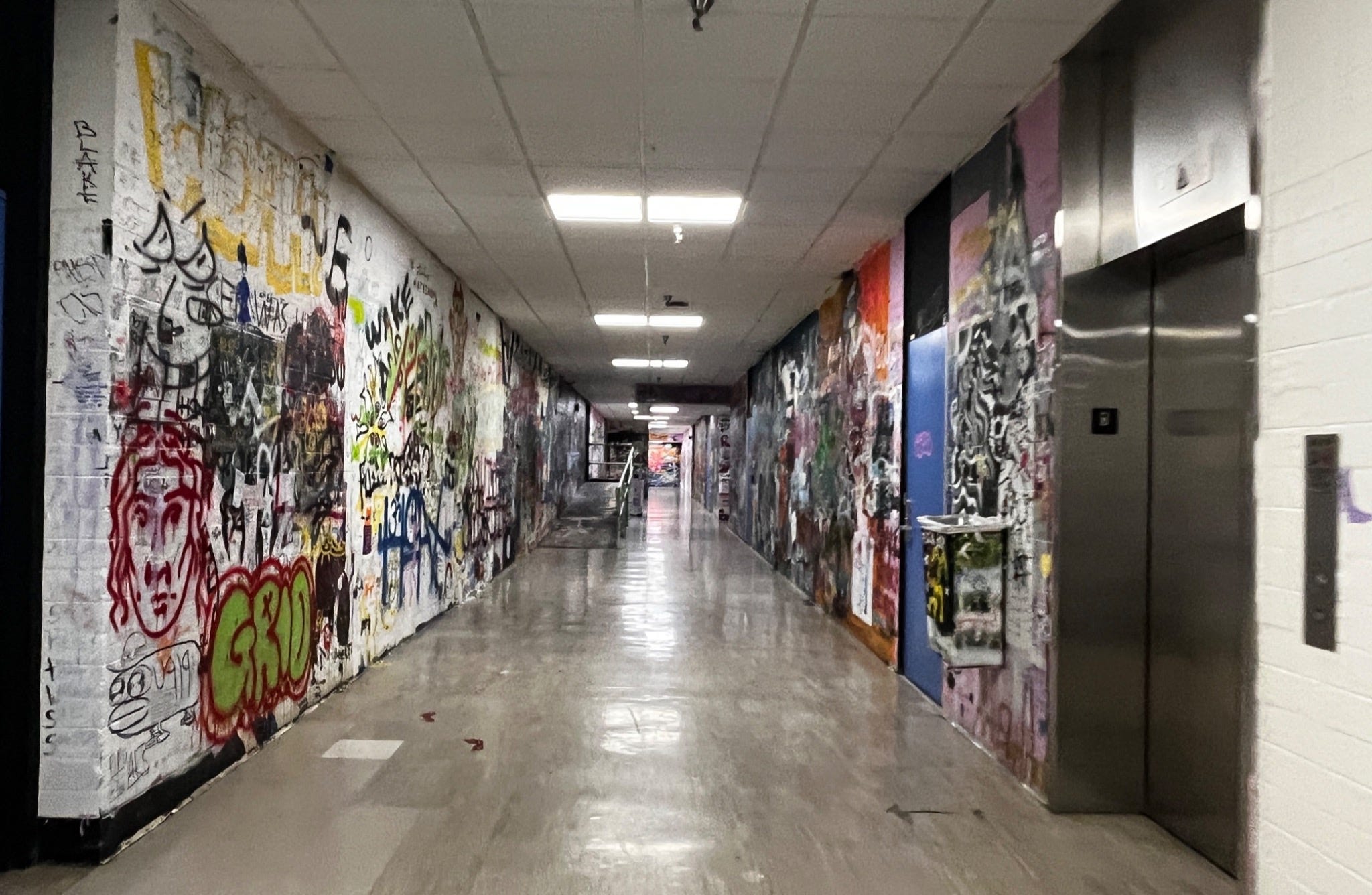
Sublevel B. Graffiti and traces of student life along the corridors of CalArts, 2026.
2. When looking slows down
Over the past few years, I studied choreography and interactive media art near Los Angeles. It was an intensely practice-based environment. Reading scripts, rehearsing, designing, production meetings, technical tests, and performances often overlapped within the same week, while every production seemed to develop through a completely different process.
I spent a great deal of time learning how “design” actually happens: how to read a script before the first production meeting; how an idea travels from paper into a rehearsal room; how cameras, projections, sound, lighting, and performers begin to relate to one another; and why an idea that looks beautiful on paper might fail completely once it enters a space.
Across courses, collaborations, technical experiments, and productions of very different scales, I participated in or encountered more than a hundred projects over three years. That density gradually changed the way I looked at a “finished work.”
Sometimes I felt as though I lived in a small village. At other times, it felt like a strange Disneyland—behind every door, someone was building another world.
But Los Angeles itself is enormous.
Going from school into the city to see a performance requires transportation, time, money for a ticket, and simply knowing what is happening that month. When classes, rehearsals, work, and my own practice were all competing for attention, I could no longer imagine that I could understand the artistic landscape of a city simply by seeing more and more.
Instead, the way I encountered work became more dispersed.
A professor would invite me to something they thought was worth seeing. A friend would tell me about a strange performance they had seen the night before, and I would go. An actor might be someone I had worked with before. An artist’s work might connect unexpectedly with a technical experiment I was doing. Sometimes I went looking for earlier work by a mentor. Sometimes I sat alone in a film screening room in the afternoon and quietly watched moving images. On many nights, I stayed behind to see augmented reality, virtual reality, animation, film, and performance experiments that were still taking shape.
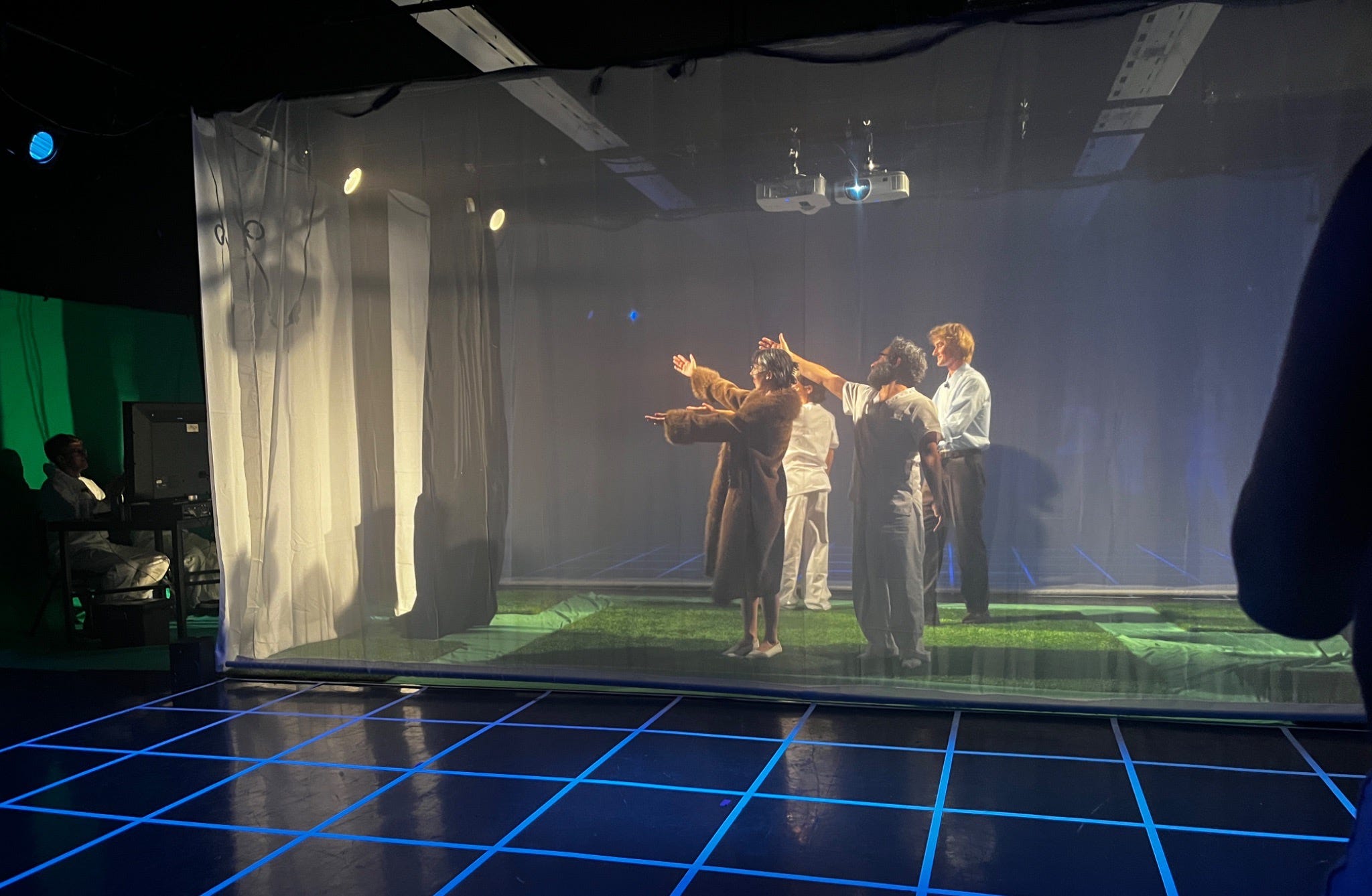
Caryl Churchill’s A Number (2002), presented by Mass Delusion and directed by Kaydeni Merritt at F100 studio, CalArts, 2026.
I was often stepping, through the gaps between my own rehearsals and productions, into rooms that other people were still building.
Those works did not necessarily know what they would eventually become. Some had no climax. Some technologies were still unstable. Some structures would look entirely different the next time I encountered them. Rather than thinking of them simply as “unfinished,” I began to think: some questions had not yet been closed.
I also began to realize that the reason I chose to see a work and the reason that work eventually stayed with me could be two completely different things.
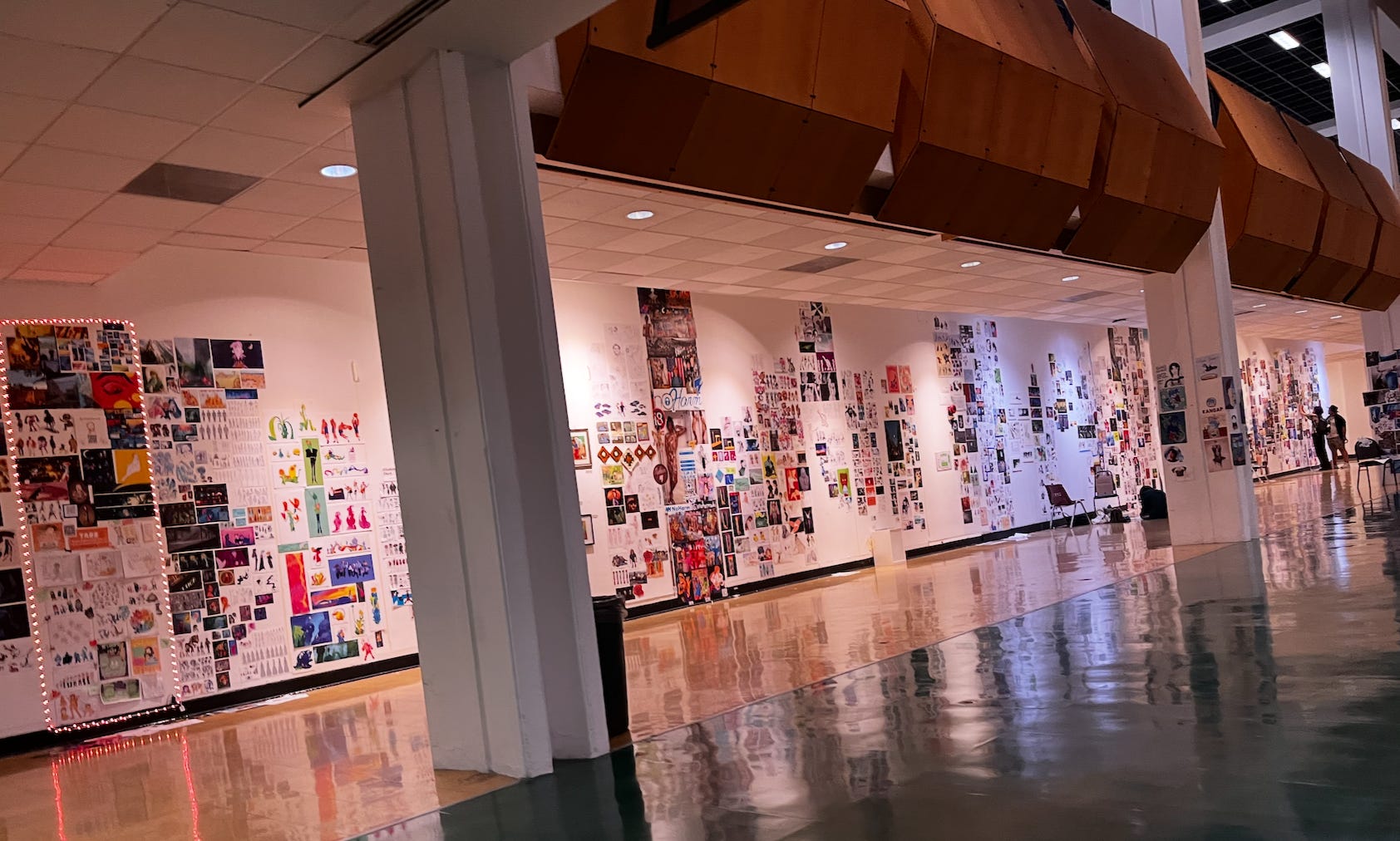
One of the Thursday Night Gallery gatherings at CalArts. Animators projected their works and processes onto the walls; later in the evening, people gathered for live drawing. These informal events often unfolded alongside parties and other student-led activities across campus, 2023.
3. When Looking Begins to Shift
In Jean Genet’s The Maids, directed by Kip Williams, the question of where an audience chooses to look became particularly tangible.
I had already heard about Williams’s use of live cameras in earlier productions, so I entered the theater with certain expectations of the medium. What stayed with me, however, was not simply that “this production used cameras,” but the way three performers continually redirected my attention within an extraordinarily precise theatrical structure.
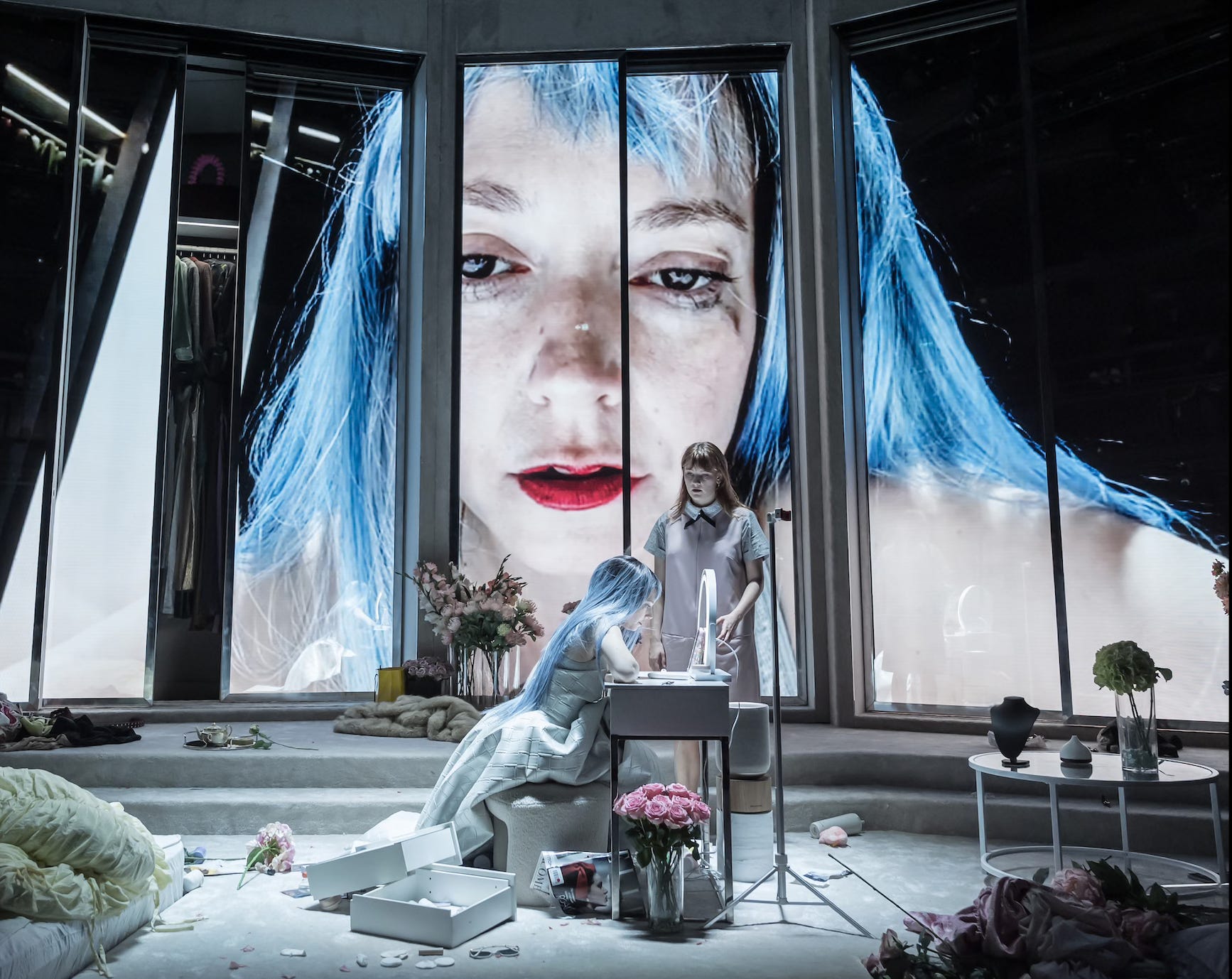
Lydia Wilson (left) and Phia Saban in The Maids, directed by Kip Williams at the Donmar Warehouse, London, 2025. Photograph: Marc Brenner. Image via The Guardian.
Imitation, projection, and role-playing already exist between the two maids. Once the phone enters that relationship, a face can suddenly expand until an intimate expression becomes part of the architecture of the stage. Mirrors, framing, costumes, and moving images do more than allow us to see the actors more clearly; they continually unsettle whom I am supposed to believe. When the mistress appears, she can perform directly in front of me, then reappear inside another constructed image that reshapes the reality I have just seen.
The physical body is still standing there, yet its enlarged double may already occupy almost my entire field of vision.
It is not simply that a face has been enlarged. A person’s presence has been divided across different distances of looking.
This displacement did not make me feel further away from the performers because of the augmented visual effects. Instead, details that might otherwise have remained inaccessible became unusually sharp and sensitive. The movement of the cameras, the way performers held their phones, and the continual reorientation of the space gradually formed a visual rhythm of their own.
As the work moved toward its later sections, the order established onstage began to unravel. Relationships were repeatedly reconstructed. The wardrobe, artificial flowers, clothes, phones, and images seemed to shift away from the positions they initially occupied. Layers of broadcast, imagination, suspicion, and misunderstanding accumulated. What caught my attention, particularly as a choreographer, was how helplessness and cunning did not remain attached to one fixed character; they were exchanged and layered through movement and language.
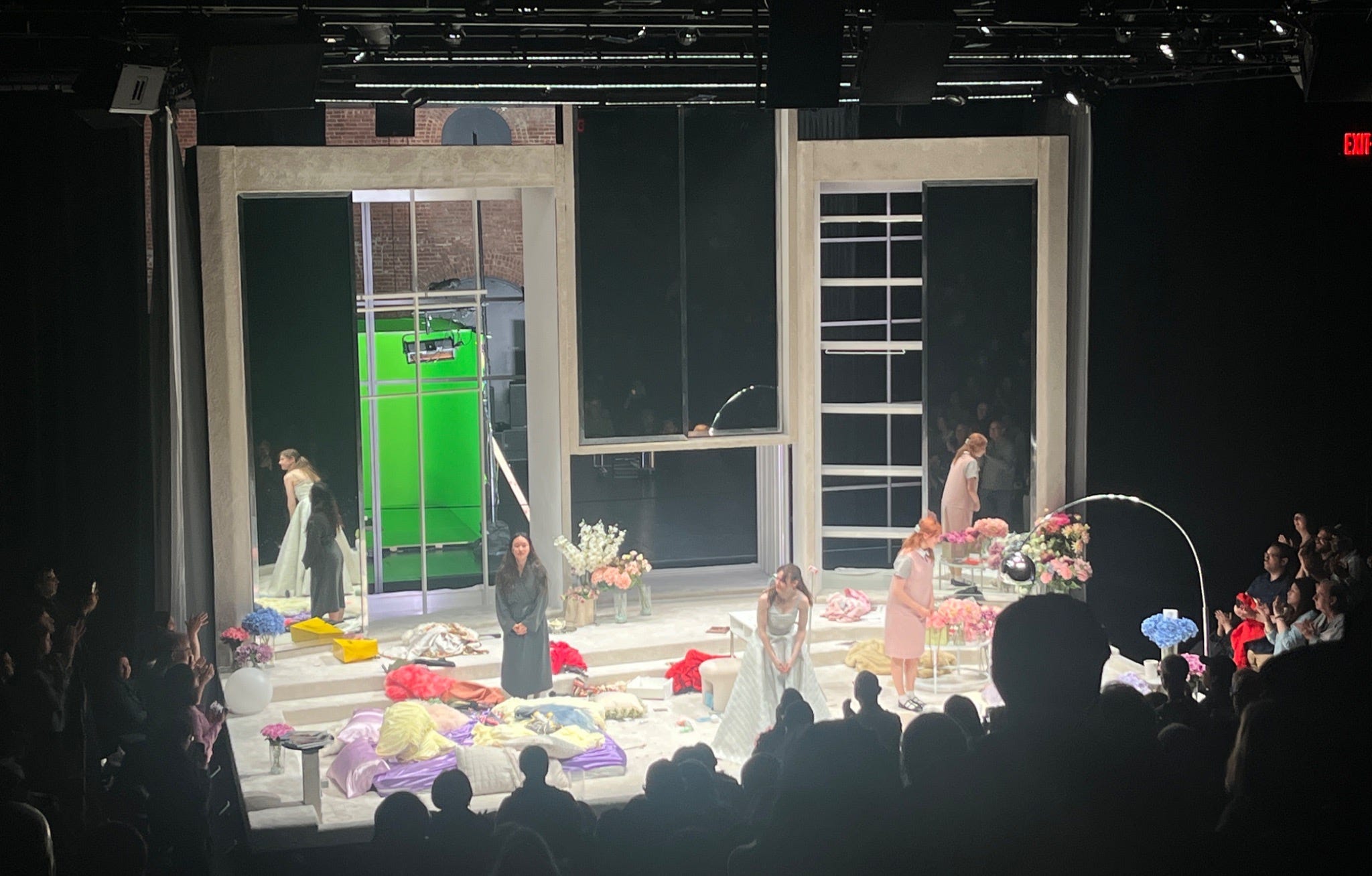
Curtain call of The Maids, written by Jean Genet and directed by Kip Williams at St. Ann’s Warehouse, New York, 2026.
Through this, I encountered anew how role-playing, class, sisterhood, and power in a script written long ago could be displaced again through contemporary media.
What matters is not that the camera “modernizes” an old play, but that the camera brings the act of looking itself into the characters’ game of power.
This way of looking has also returned to my own practice. When I use live camera, projection, or hybrid media, I find it increasingly difficult to accept an image as simply a beautiful background. I ask: if I remove it, what does the work lose? If the answer is “nothing,” perhaps it did not need to be there in the first place.
In the work, the presence of the phone turns a person’s face into another kind of space, allowing the “In-Real-Life (IRL) body” and the “image” to overlap across the wardrobe and the stage without ever fully aligning. It is precisely this imperfect overlap that produces a lingering discomfort in the act of looking; the medium no longer simply brings the story before our eyes, but becomes part of that sense of misalignment.
4. Very little can build an entire world
Primary Trust left me with almost the opposite sensation.
What I remember is not a gigantic image, but a psychological state and a series of very simple theatrical actions. I also remember the live musician at the side of the stage: sound occasionally entered, then receded again into the room.
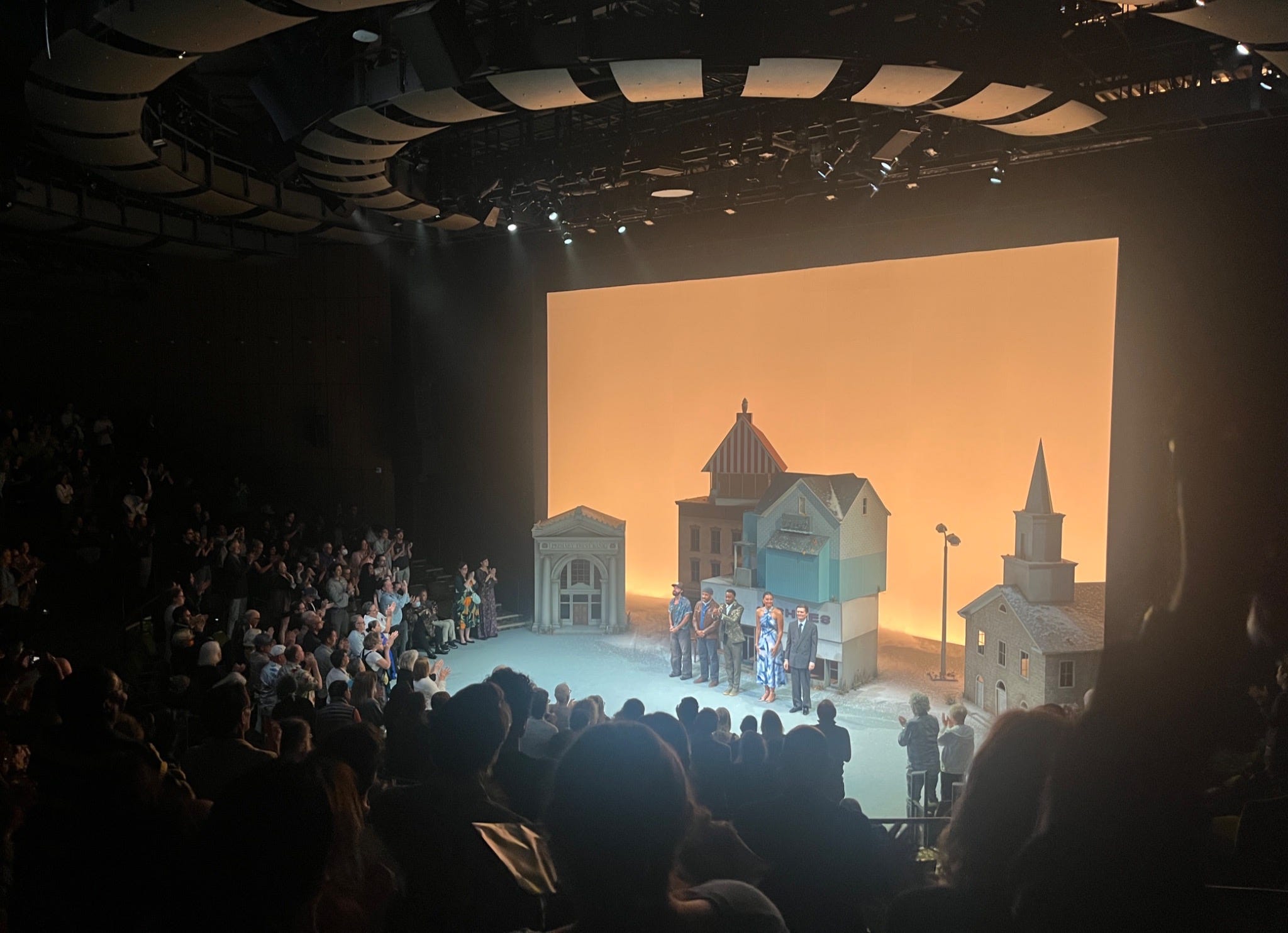
Curtain call of Primary Trust, written by Eboni Booth and directed by Knud Adams at the Mark Taper Forum in Los Angeles, 2026.
The houses onstage were small; much of the set had the scale of a model. Strangely, the world did not feel smaller because of it. Instead, I felt as though I were sitting beside a street, watching this person’s life pass through the same place day after day.
A person says nothing. He simply stands there, looking toward a place where he believes someone else might appear.
For someone accustomed to analyzing design, this interested me. A stage does not need to continually prove that something exists. When performance, lighting, music, and the shifting of roles are precise enough, a small pause or physical action can hold more associations than an abundance of information.
The other performers carry a playful, fluid energy, continually transforming the people and spaces around him, while something in the protagonist remains unchanged. He waits. He works. He returns to familiar places.
I began to think differently about execution in performance, and to notice some of the most basic structures inside large theatrical productions. How is a rule established? How many times must it repeat before I begin to believe it? When is it broken for the first time? Why does the largest change happen precisely then?
“Finish” began to mean something different to me. It was no longer simply polished or the absence of mistakes. Instead, the work seemed to know where to place its center of gravity.
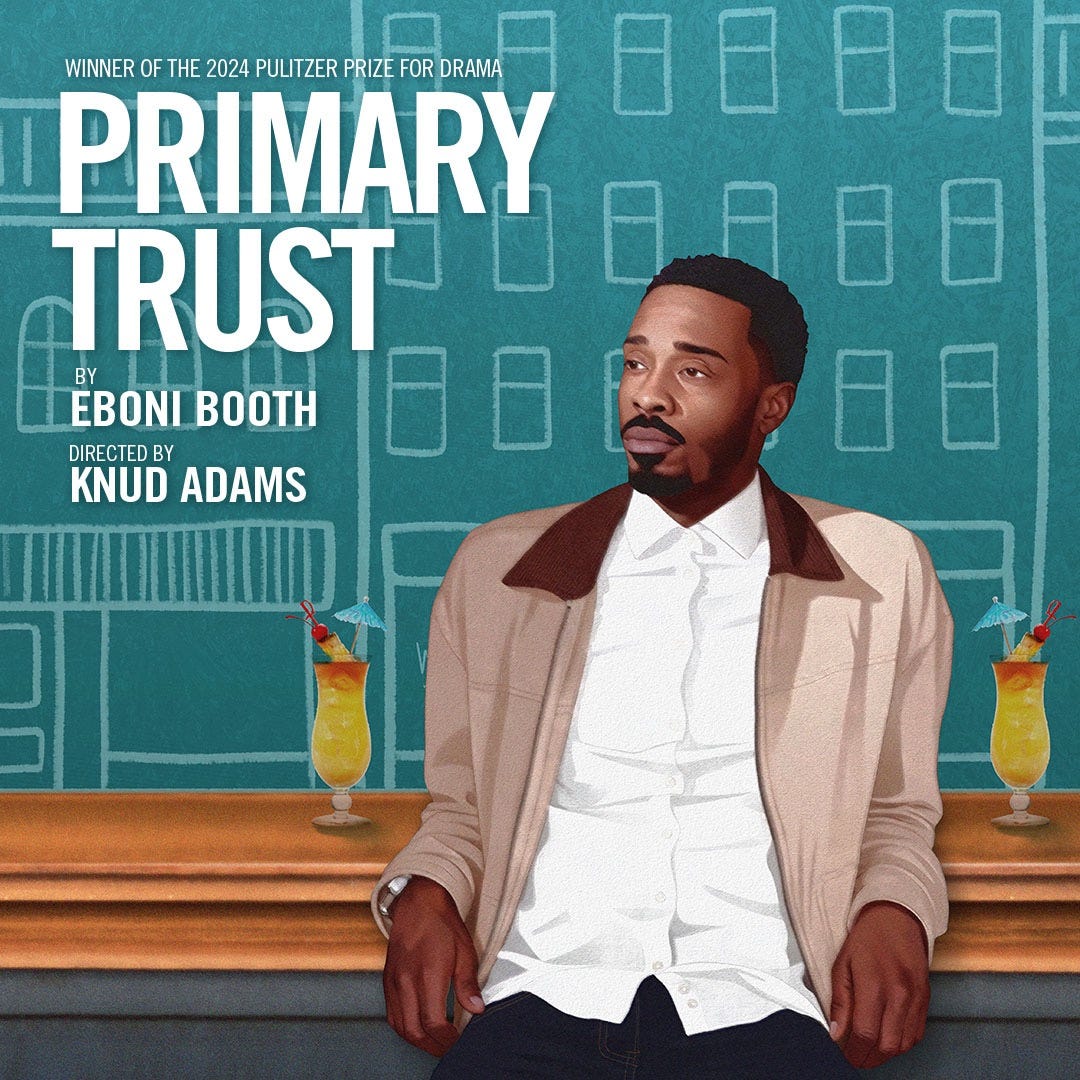
Primary Trust, written by Eboni Booth and directed by Knud Adams at the Mark Taper Forum, Los Angeles. Promotional artwork courtesy of Center Theater Group. 2026.
I saw the performance with friends. Afterwards, its stories of companionship, work, loneliness, and trust seemed to mingle with what each of us was living through at the time.
Looking has a social life of its own. A friend recommended something to me. A performance begins another conversation between us. That conversation might then change the way I enter my next rehearsal.
5. Sometimes the light of a work comes from outside the work
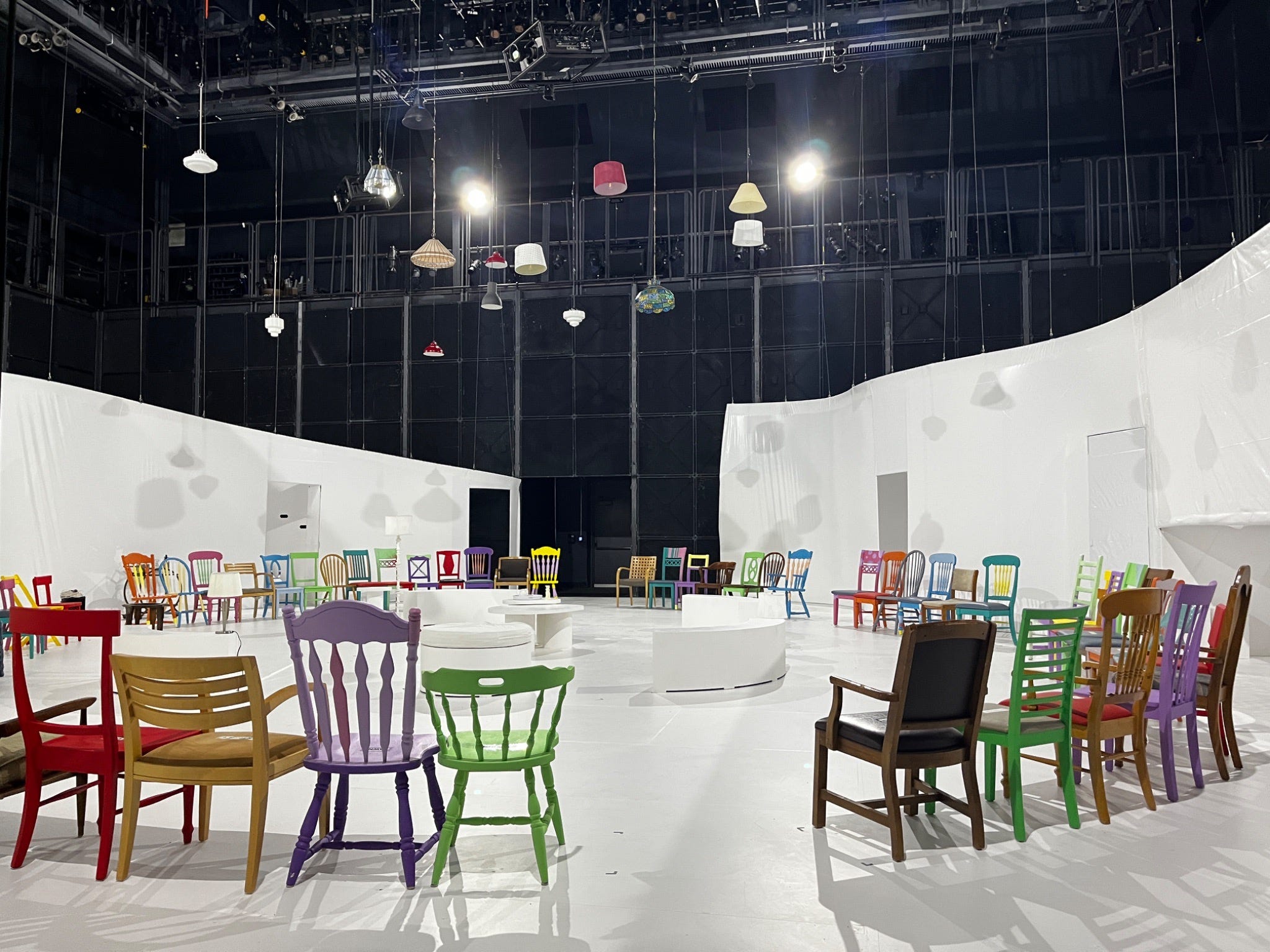
The CalArts School of Theater presented María Irene Fornés’s Fefu and Her Friends, directed by Tatou Dede at the Walt Disney Modular Theater (MOD). 2024.
My memory of seeing Fefu and Her Friends at school is different again.
The audience was dispersed through different rooms, encountering scenes at close range. One of the principal performers was also an actor I knew. When I first arrived at school, still adjusting to reading plays and writing criticism in English, she would sometimes help me correct my grammar.
Later, I sat in the audience and watched her become someone else.
After the performance, we returned to the familiar life of theater students: celebrating, cleaning up, moving props, hearing people talk about how the work had gradually become what it was. Later still, I made different works in that same theater.
The meaning of space slowly changed. When I first entered it, it held other people’s stories. Later, it also began to hold my labor, failures, collaborations, and memories.Perhaps this became one of the important starting points for why I chose to make work in Los Angeles: to sense the radiance of a work, and the places from which friendship grows.
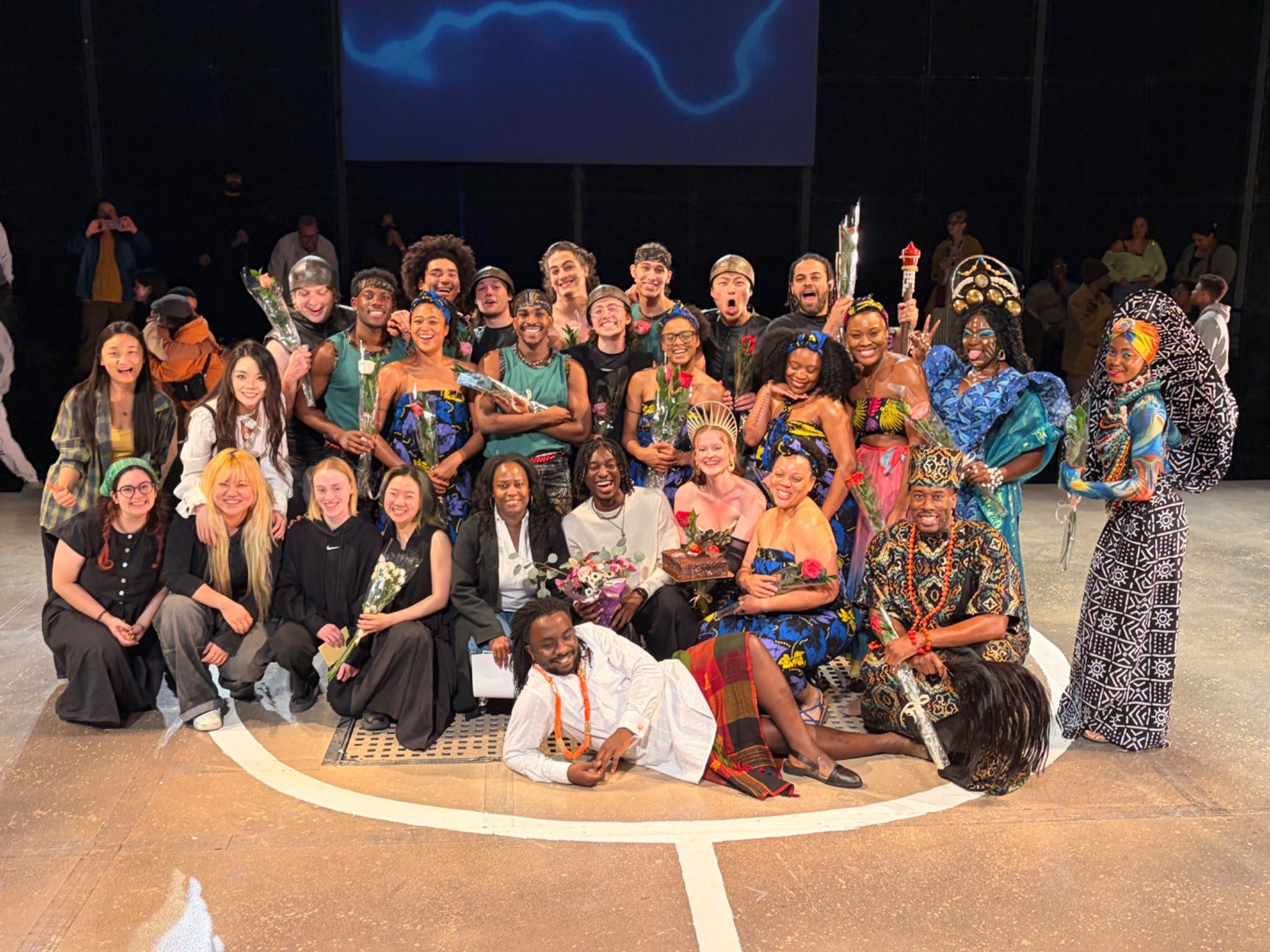
After the closing-night performance of The Half God of Rainfall at CalArts, written by Inua Ellams and directed by Kobina Hagan. Video media design and choreography by Zelia ZZ Tan, 2026.
Some of a work’s radiance does not come entirely from what is completed onstage. It also comes from relationships surrounding the work that an audience may never see: rehearsals, friendships, exchanges, technical collaborations, disagreements, recommendations, cleaning up after a performance, and the traces a work leaves in different people’s lives.
The boundary around “the work” slowly loosens through these relationships, until parts of it become part of life.
That does not mean friendship takes away my judgment. On the contrary, as relationships become closer, I want to be able to say more precisely: What actually worked? What did not? Which medium opened the work, and which decision closed something down?
Relationships do not cancel criticism. It may ask for a more responsible way of looking.
6. I became more selective, and more open
This may be the most contradictory change in the way I have learned to look. When I see a camera onstage, I cannot help asking why it is there. When I see a gigantic image, I notice what it actually changes. When lighting, sound, scenography, text, and bodies all appear together, I am no longer excited simply because something is “interdisciplinary.”
At the same time, I have become more open. I care less about whether an important artistic encounter happens on Broadway, in a black box, at school, in a club, a museum, a friend’s rehearsal room, or inside an experiment that has not yet found its final form.Being more selective does not make me judge a work more quickly. It actually makes me slower.
I have begun to pay attention to what different media are negotiating with one another.I am less interested in thinking of an image as “serving” a director’s vision, or music as “serving” dance. When different media really begin to speak, they feel more like people living in the same room: sometimes supporting one another, sometimes stealing attention, sometimes misunderstanding each other, sometimes leaving space. The world of work slowly forms through these relationships.
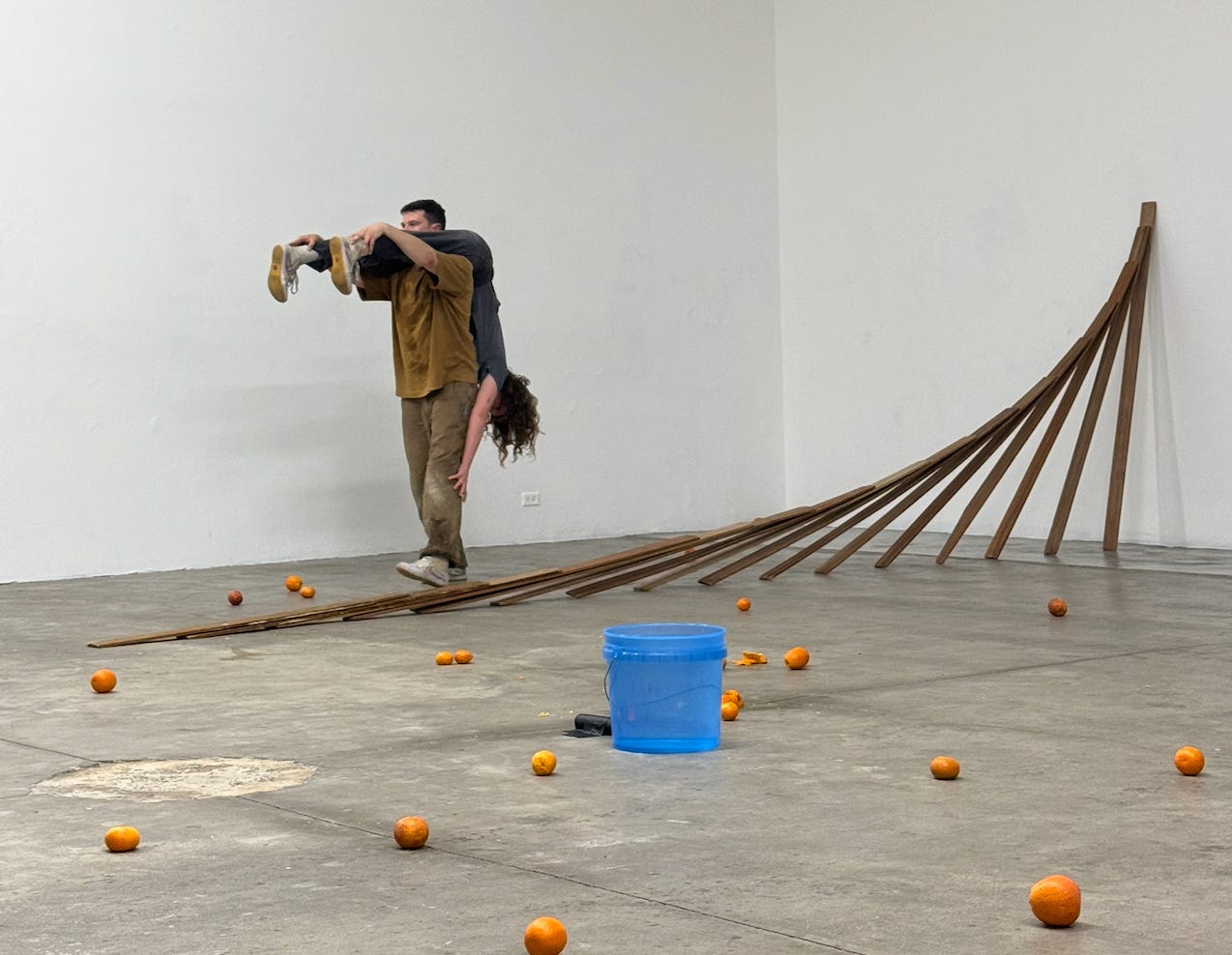
Shorter Than a Tunnel Longer Than a Bridge by Amelia Charter and Sam Wentz at Human Resources Los Angeles, with sound by Dylan Marx, 2026.
I like to imagine watching a performance as being invited into a stranger’s house.
When I first enter, I do not know the rules. I do not know where I should sit, who will speak, which door will open, or what I should believe. As events unfold, I begin to understand how this world breathes: what repeats and what is suddenly interrupted; who holds power and who keeps waiting; when an image becomes more vivid than a living person; why a tiny gesture suddenly gains weight half an hour later.
When I only have enough time to enter a few of these rooms, I become more attentive to why I choose to stay. Perhaps what I want to see is no longer simply what an artist “wants to express,” but this:
What conditions have they created that allow me to gradually move closer to a question?
Sometimes I only begin to feel the importance of a work after I have left the theater.I am still looking forward to the next time I enter.
Publication note: The original Chinese version of this essay was first published by the International Association of Theatre Critics (Hong Kong). This English translation is published by the author. Please do not reproduce or republish this essay without permission.
Read the original Chinese version here: https://www.iatc.com.hk/doc/107998