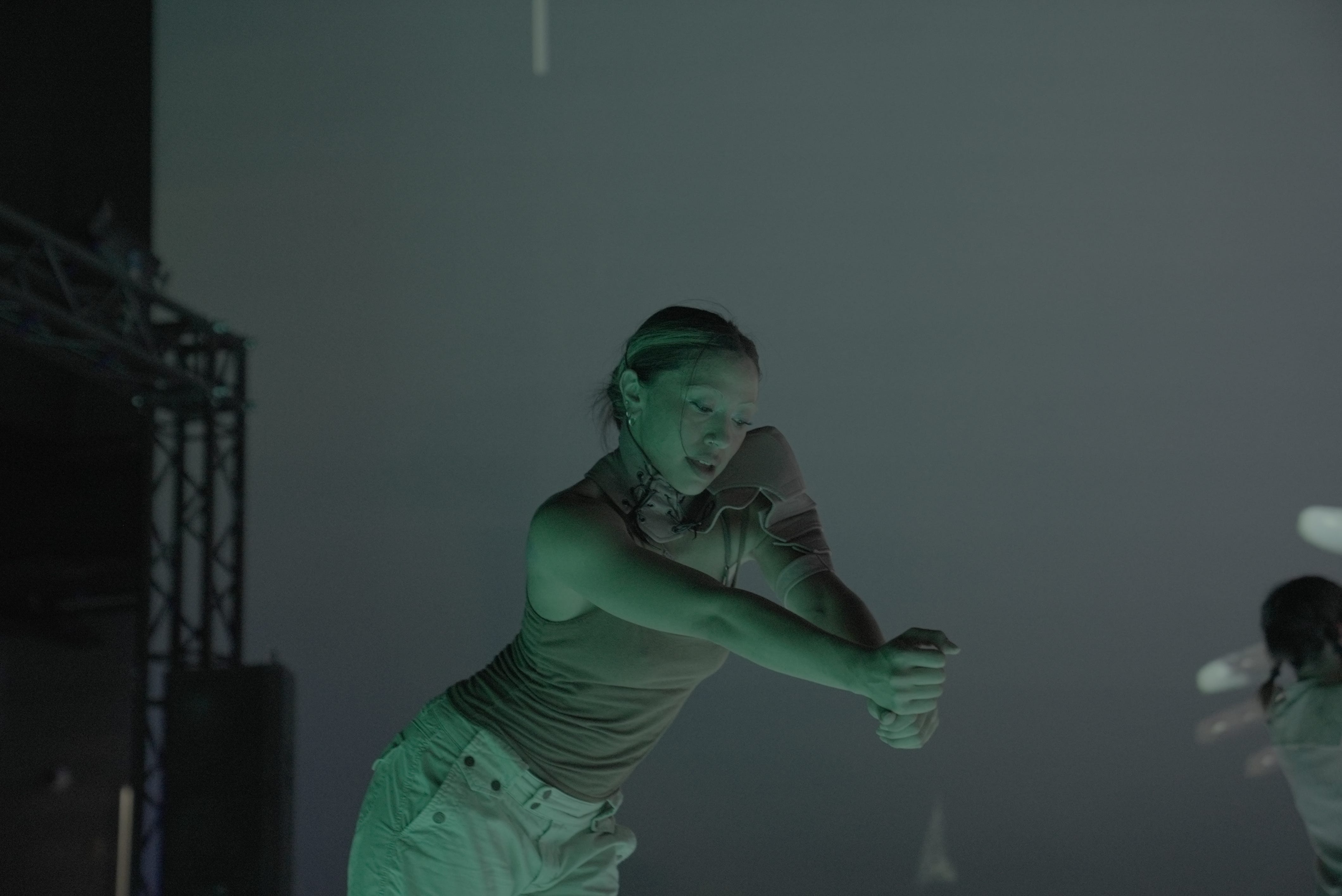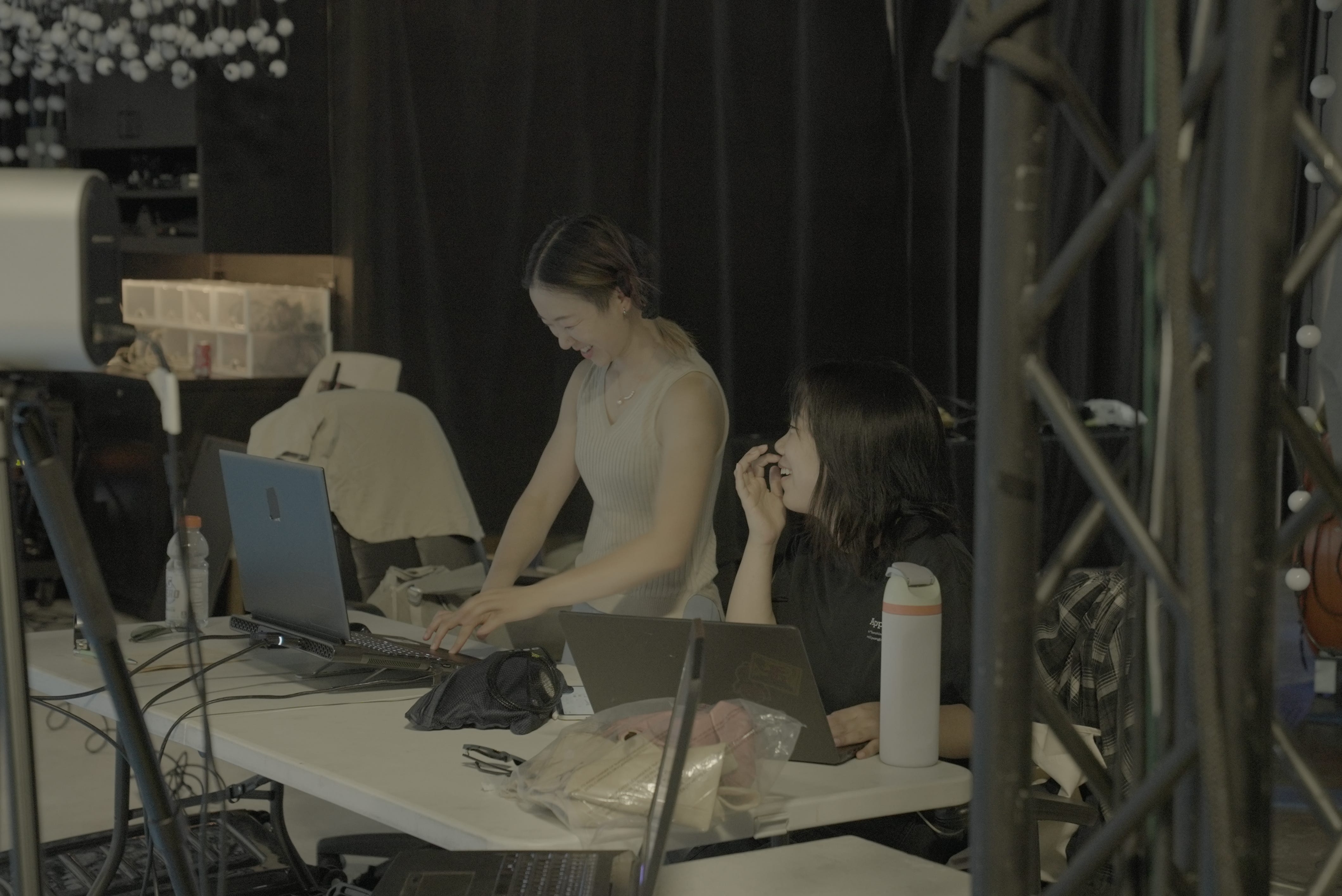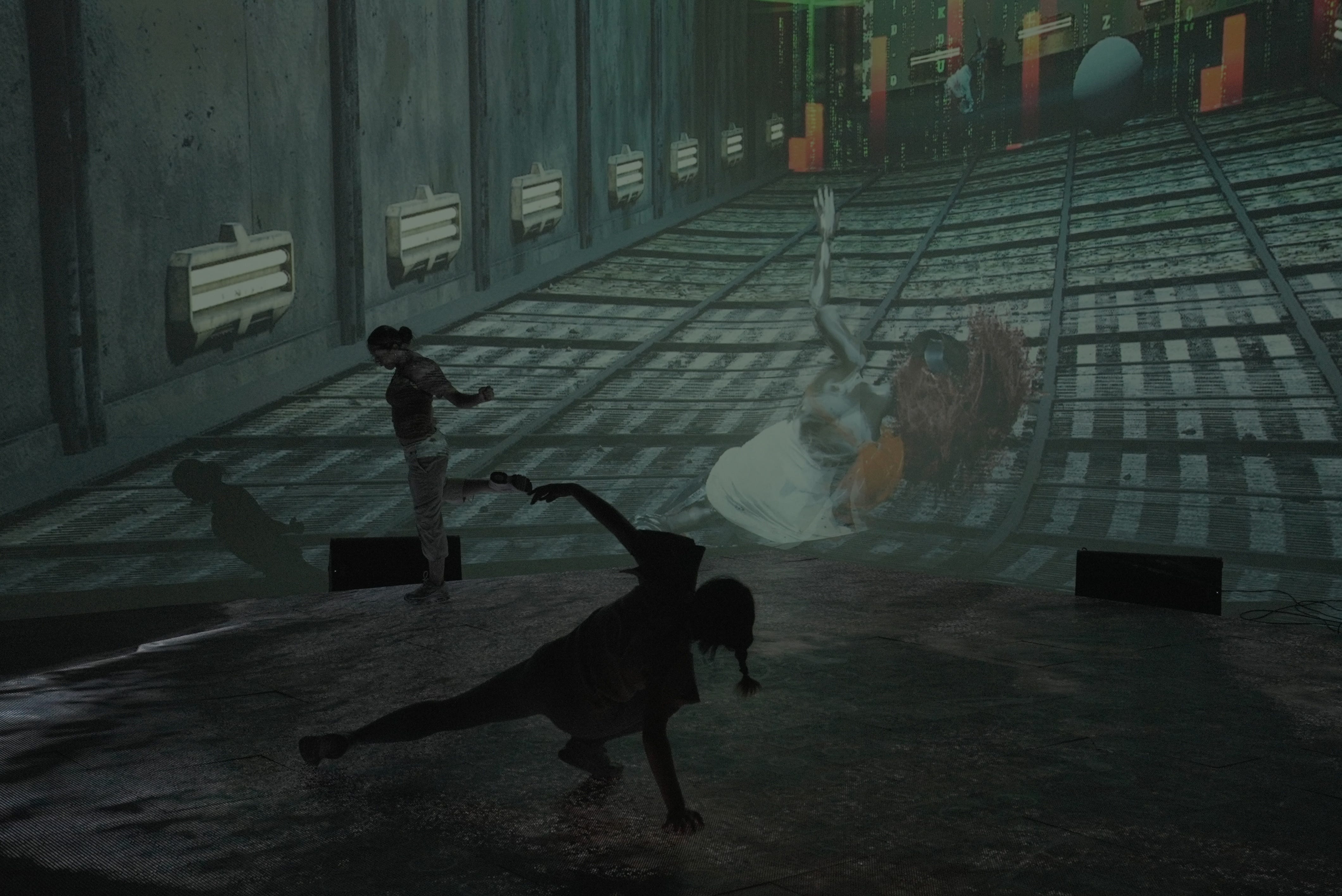
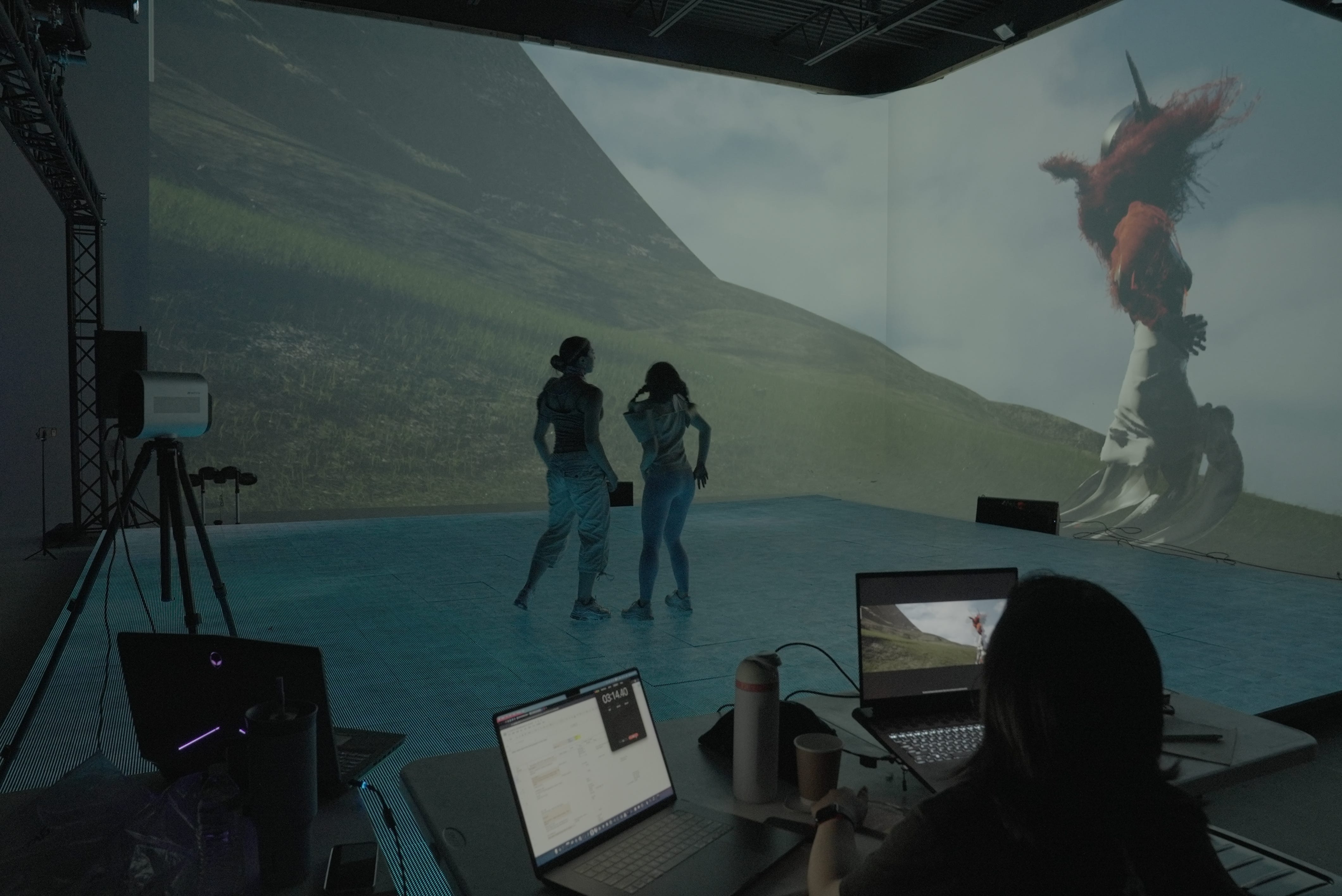
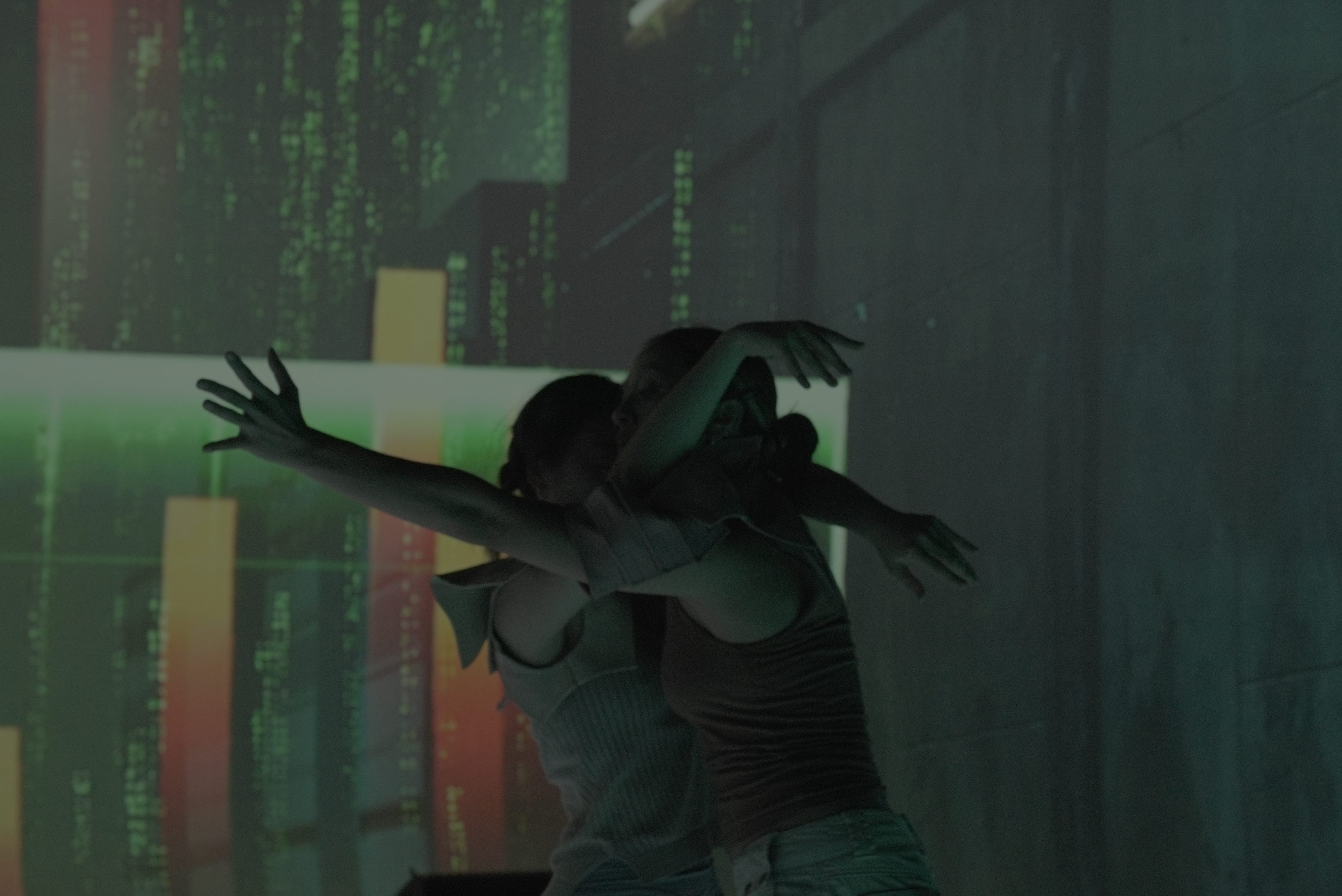
BTS photos by Dana Dahyun Yoon · Sage Sanchez & Nellie Xie & Zelia ZZ Tan
at TechDanceLab & Alternity
For a long time, I wasn’t always able to invite the people I love to see my performances. Now, I treasure every opportunity to bring the work closer to the communities, friends, and family I care about.
After graduating from my master’s programs at CalArts, I took part in a few formal showcases and returned to applying for residencies—with many rejections. At the same time, I was fortunate to be shortlisted and invited to a few events in Los Angeles, some in spaces I had been quietly working toward for years.
I haven’t taken an artist fee from these presentations. During a period when I wasn’t able to take on paid work, I turned that time toward my own research—rehearsing, writing, testing new formats, and finding ways to keep the practice moving.
It reminds me of other pivotal decisions I’ve made—why I keep choosing to let my practice grow in this mixed soil, where different cultures, languages, bodies, and media collide and nourish one another. I think of the books that accompanied me while I was learning how to communicate, and the encounters with bodies that taught me that something can continue to be expressed even when language cannot reach it yet.
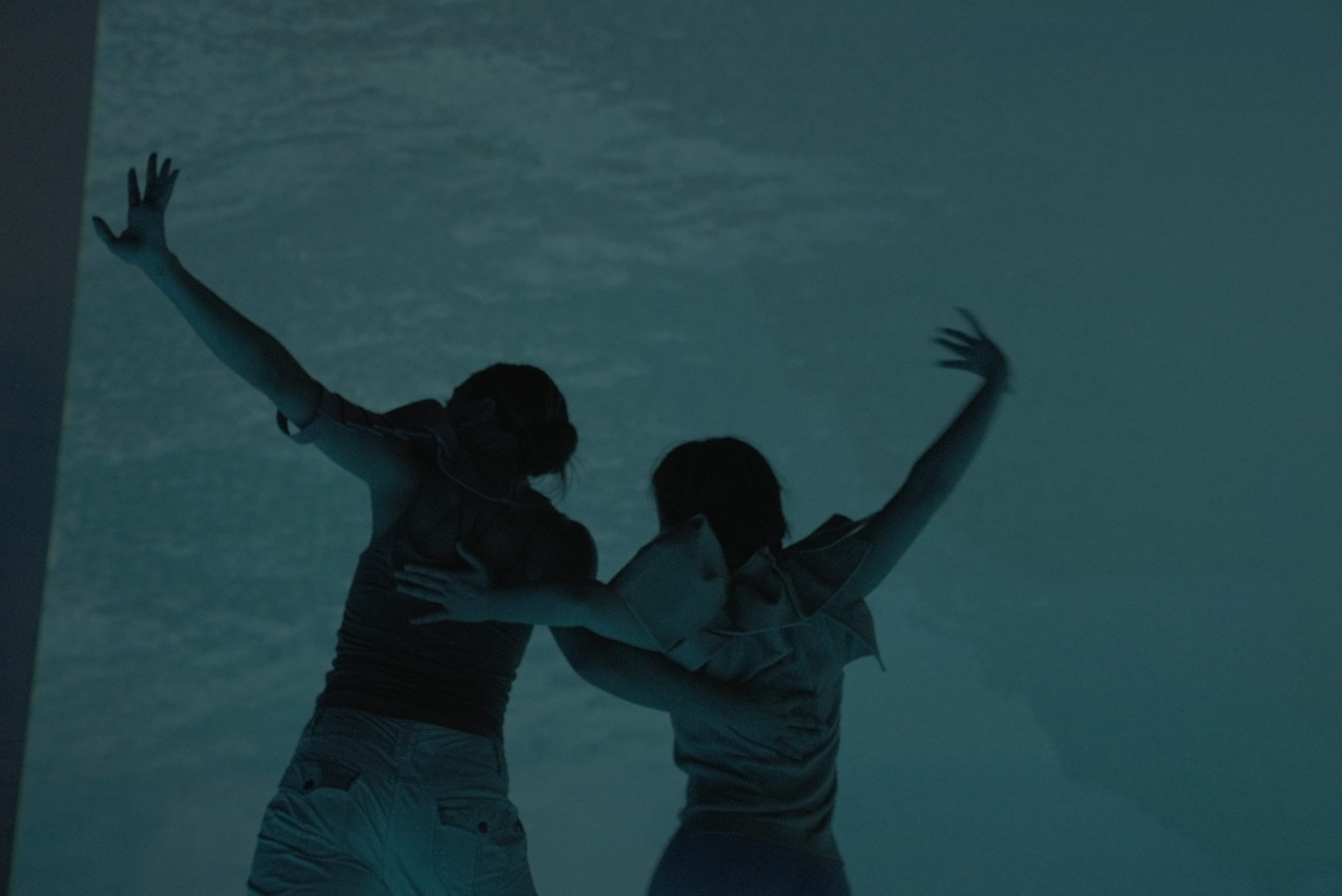
For the last sharing of Becoming With, I contributed my own time and resources to the community gathering while paying the dancer who researched and performed the work with me. As I’m still learning how to build an independent practice, this raises a very practical question: When resources are limited, how do I begin building a way of working that can be sustained while respecting what each person brings?
This is not only a question of budget. My mentor Gilles often reminds me that developing work professionally with a team requires a rigorous methodology. I’m increasingly understanding that methodology is not only about realizing the work, but about creating the conditions for working together. I know how chaotic a creative process can become, which makes me value the clarity and structure needed to hold that uncertainty while respecting each person’s time and contribution.
Recently, I’ve been curious:
What truly needs to exist together?
What is the one choreographic game worth playing again?
很长一段时间里,我并不总有机会邀请我爱的人来看我的演出。现在,我越来越珍惜每一次机会,让作品离我所在的社群、朋友和家人更近一点。
从 CalArts 的硕士项目毕业以后,我参加了几次正式的作品呈现,也重新开始申请驻留——收到很多拒信。与此同时,我也很幸运地进入了一些 shortlist,并受邀参加几个在洛杉矶的活动;有些机会,是我已经默默努力了好几年、一直希望能够走进去的空间。
这几次呈现,我都没有收取艺术家费用。在一段暂时无法接受有偿工作的时间里,我把这些时间重新放回自己的研究:排练、书写、测试不同的形式,也寻找让实践继续流动的方法。
这让我想起过去一些很关键的决定——为什么我一次次选择让自己的创作生长在这样的混合土壤里:不同的文化、语言、身体与媒介彼此碰撞,也彼此滋养。那些在我学习如何沟通时陪伴我的书,那些让我意识到,有些东西即使语言还无法抵达,身体仍然可以继续表达的相遇。
最近一次 Becoming With 分享里,我投入自己的时间和资源参与 community gathering,同时支付了共同研究及表演的舞者费用。对仍在学习如何建立独立创作实践的我来说,这也带来一个很实际的问题:当资源有限时,我怎样开始建立一种既能持续、也尊重每个人投入的工作方式?
这不只是预算的问题。我的导师 Gilles 常常提醒我,与一个团队专业地发展作品,需要严谨的方法。现在我越来越理解,方法不仅关乎作品如何实现,也关乎我们如何创造一起工作的条件。我知道创作过程可以有多混乱和不确定,也因此更珍惜其中必要的清晰与结构——不是为了消除这些不确定,而是让每个人的时间与创造力都能被认真对待。
最近,我很好奇:
究竟有哪些东西,真的需要同时存在?
哪一个编舞游戏,值得我们再玩一次